Un progetto di


TREES FOR PEOPLE ALLA MILANO MARATHON 27
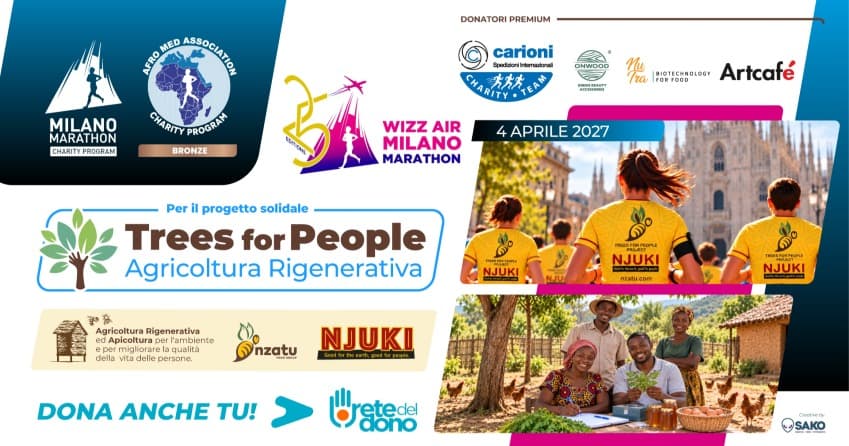
AFRO MED partecipa alla Milano Marathon Charity Program 2027 con 12 staffette, 10 pettorali per la maratona 42K e 10 pettorali per la Family Run.
Unisciti a noi, corri con noi e aiutaci a fare la differenza! Per sostenere il progetto TREES FOR PEOPLE, contattaci al 348 6678839 oppure [email protected] (Doriano Ponzi, Presidente Afro Med)
Obiettivo generale
Utilizzare le donazioni della raccolta solidale come finanziamento catalizzatore per ampliare il modello di agricoltura rigenerativa, già avviato con 40 agricoltori ToT (Training of Trainers) nel distretto di NAMWALA – ZAMBIA, coinvolgendo progressivamente le comunità e i giovani che gravitano intorno a loro.
L’obiettivo è creare un modello comunitario integrato, capace di generare reddito, sviluppare competenze, proteggere l’ambiente e rendere gli investimenti progressivamente autosostenibili.
1. Attività principali:
🌱 Agricoltura Rigenerativa, Biodiversità e Salvaguardia della Mega Fauna
Sviluppo integrato di moringa, agroforestazione e colture rigenerative.
Promozione di pratiche agricole che migliorino la fertilità del suolo e proteggano la biodiversità.
Rafforzamento del ruolo dei ToT come moltiplicatori all’interno delle comunità.
Allontanamento dei giovani dalla pratica del bracconaggio.
🐔 Pollame e fondo rotativo
Avvio/ampliamento di piccoli allevamenti di pollame (galline ovaiole).
Ciclo produttivo breve, di circa 5 settimane, per creare opportunità di reddito frequenti.
Utilizzo del letame come fertilizzante naturale.
Creazione di un fondo rotativo che reinvesta parte dei ricavi nel progetto, permettendo di aumentare la produzione e coinvolgere progressivamente nuovi agricoltori.
Possibile collaborazione con la “Poultry Association of Zambia” per formazione tecnica e accesso al mercato.
🐝 Apicoltura
Sviluppo dell’apicoltura come fonte di reddito e strumento di conservazione delle foreste.
Collegamento dell’attività apistica con agroforestazione e biodiversità.
👩🌾 Youth & Girl Empowerment
Coinvolgimento di giovani e ragazze in percorsi di formazione professionale e imprenditoriale.
Richiesta di partnership con la “Mawaggalli Technical School” per la formazione pratica nella lavorazione del legno.
Produzione locale di arnie e altre attrezzature agricole, creando un percorso dalla formazione alla produzione e alla generazione di reddito.
2. Impatto atteso:
Il progetto mira a generare un impatto su quattro dimensioni integrate:
ECONOMICO (Economia circolare)
Più fonti di reddito per agricoltori e giovani e sviluppo di micro-imprese locali.
SOCIALE
Maggiore coinvolgimento e autonomia di giovani e ragazze e possibilità di accesso alle attività produttive per un numero crescente di famiglie.
CULTURALE
La creatività e la formazione professionale giovanile rappresentano oggi un motore di sviluppo strategico e un'alternativa concreta per ridurre le migrazioni e creare occupazione locale.
AMBIENTALE
Rigenerazione dei suoli, aumento della biodiversità, sviluppo dell’agro forestazione, maggiore protezione delle foreste e salvaguardia della mega fauna.
SOSTENIBILITÀ
Creazione di un sistema in cui parte dei profitti viene reinvestita nella comunità, permettendo al progetto di crescere grazie al finanziamento iniziale.
ENGLISH VERSION
AFRO MED is participating in the Milan Marathon Charity Program 2027 with 12 relay teams, 10 bibs for the 42K Marathon and 10 bibs for the Family Run.
Join us, run with us, and help make a difference! To support the TREES FOR PEOPLE project, contact us at 348 6678839 or [email protected] (Doriano Ponzi, President of Afro Med).
Overall Objective
To use donations raised through the solidarity fundraising campaign as catalytic funding to scale up the regenerative agriculture model already launched with 40 Training of Trainers (ToT) farmers in the Namwala District, Zambia, progressively engaging the communities and young people around them.
The objective is to create an integrated, community-based model capable of generating income, developing skills, protecting the environment and making the initial investment progressively self-sustaining.
1. Main Activities
🌱 Regenerative Agriculture, Biodiversity and Megafauna Conservation
- Integrated development of moringa, agroforestry and regenerative farming practices.
- Promotion of agricultural practices that improve soil fertility and protect biodiversity.
- Strengthening the role of ToT as knowledge multipliers within their communities.
- Creating alternative opportunities for young people to reduce their involvement in poaching, while contributing to wildlife and megafauna conservation.
🐔 Poultry & Community Finance
- Establishment and expansion of small-scale poultry farms, particularly laying hens.
- A relatively short production cycle of approximately five weeks, creating more frequent income-generating opportunities.
- Use of poultry manure as a natural fertilizer.
- Creation of a revolving fund that reinvests part of the revenues generated by the activity into the project, enabling production to expand and progressively involving new farmers.
- Potential collaboration with the Poultry Association of Zambia to provide technical training and facilitate market access.
🐝 Beekeeping
- Development of beekeeping as both a source of income and a tool for forest conservation.
- Integration of beekeeping with agroforestry and biodiversity conservation.
👩🌾 Youth & Girls Empowerment
- Involvement of young people and girls in vocational training and entrepreneurship programmes.
- Potential partnership with Mawaggalli Technical School to provide practical training in woodworking.
- Local production of beehives and other agricultural equipment, creating a pathway from training to production and income generation.
2. Expected Impact
The project aims to generate an impact across five integrated dimensions:
ECONOMIC (circular economy)
Diversification of income sources for farmers and young people, together with the development of local micro-enterprises.
SOCIAL
Greater involvement and empowerment of young people and girls, with opportunities to access productive activities for an increasing number of families.
CULTURAL
Young people's creativity and vocational training represent a strategic driver of development, providing concrete alternatives to migration and creating opportunities for local employment.
ENVIRONMENTAL
Soil regeneration, increased biodiversity, development of agroforestry, stronger forest protection and the conservation of megafauna.
SUSTAINABILITY
Creation of a system in which part of the profits generated by the activities is reinvested in the community, allowing the project to grow through the initial funding and progressively involve new beneficiaries.